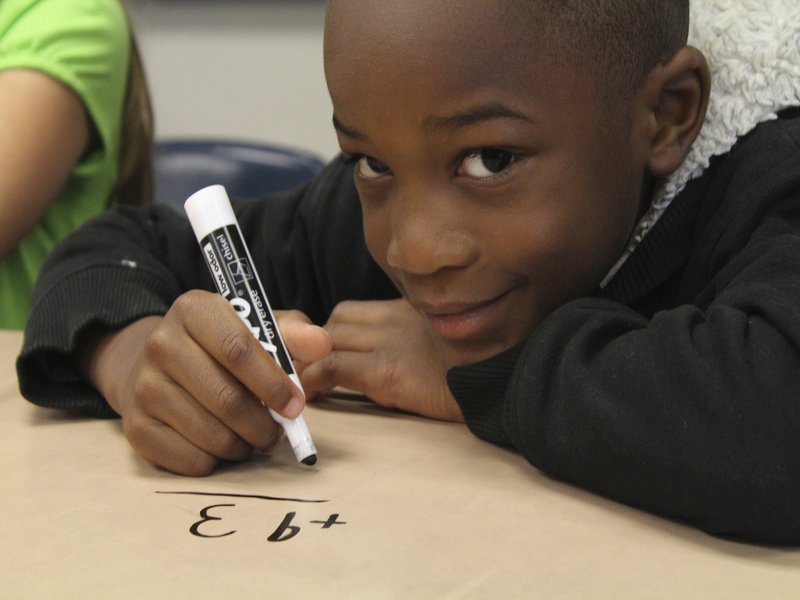
While children with learning disabilities may face daunting challenges, they can definitely overcome their weaknesses and take advantage of their gifts. In fact, recent studies suggest that with the proper tutoring and support, the brains of some students physically changed for the better thanks to good one-on-one tutoring.
Dyscalculia: Dyslexia for math
The articleTutoring Kids With Dyscalculia: What You Need to Know focuses on dyscalculia, which is a math learning disability. This disorder makes it difficult for students to understand numbers the same way that others do.
Luckily, scientists are starting to research this learning disability more, and try to find methods to help young students learn math. Research has shown that dyscalculia, like dyslexia, can can be aided and overcome by using different methods of instruction. Unfortunately, dyscalculia is a disorder that often falls off teachers’ and parents’ radars — we all know about dyslexia, but fewer are aware of dyscalculia. As a result, these methods may be difficult to find, even though several schools are actively increasing their focus on learning challenges.
Much of the research has shown that tutoring can provide an approproate learning environment for students to be successful and keep up in school. Essentially, tutoring can provide a specialized education program for students, which can also help them achieve long term success in their careers. One study used 15 children with dyscalculia and 15 without, and found that one-on-one tutoring significantly helped those suffering from dyscalculia. This method illustrates that extra care and release from math anxiety can make all the difference in the world to young students suffering from dyscalculia.
Author Quote"
One-on-one cognitive tutoring not only improved their math performance — it physically changed their brains!
"
Tutoring physically changes the brain
A larger Stanford study discussed in Tutoring changes the brain in kids with math learning disabilitiesalso supports this. 30 third graders received two months of one-on-one tutoring in basic math skills, half with learning disabilities and half without. They were given MRI brain scans, showing distinct differences between the children with learning disabilities and those without. The half with disabilities were given one-on-one tutoring, adjusting the pace and emphasis for each individual child. By the time the study ended, the children with learning disabilities had the the exact same brain scans as those without disabilities. One-on-one cognitive tutoring not only improved their math performance — it physically changed their brains!
Key Takeaways:
1
There are many ways to aid children who struggle with math.
2
Tutoring literally changes the brain of children who employ it.
3
Many studies have proven that tutoring is effective.
These studies shed an interesting light on the nature vs nurture debate. When nurtured appropriately, even those genetically predisposed to neurodiversity can be happy, healthy, and successful. With one-on-one cognitive tutoring catering teaching methods to each individual, these struggling students could be on the road to success.
If you or someone you know is having difficulty with math then you’ll want to try our free assessment — especially if you think dyscalculia might be the problem. Learn how to get to the root of the problem. Find out which micro-skills need strengthening and increase math learning ability. Take our assessment by clickinghere!
Is Your Child Struggling in School?
Get Your FREE Personalized Learning Roadmap
Comprehensive assessment + instant access to research-backed strategies